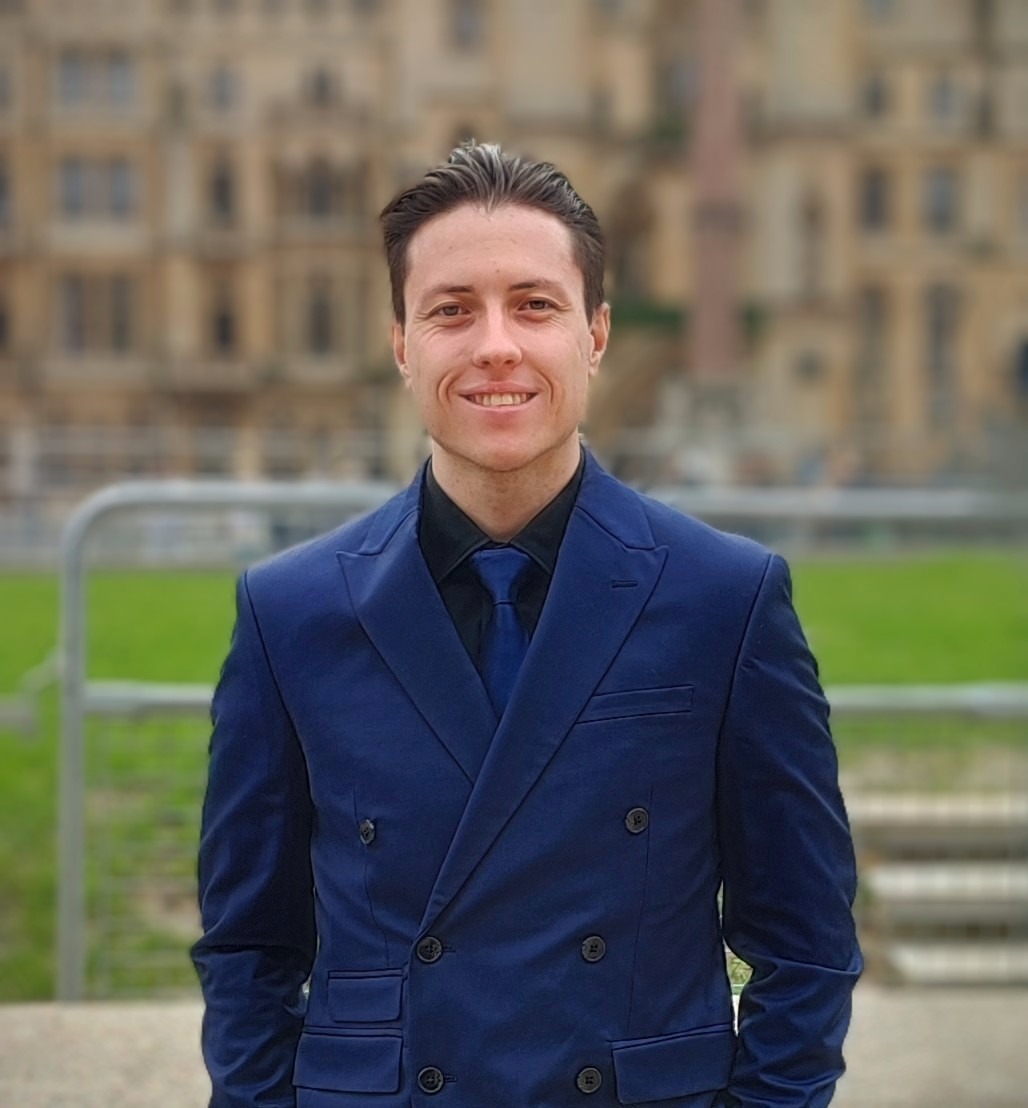
Victoria Natsai Chasi is a South African and Zimbabwean Master of Public Administration graduate from Cornell University, with a Bachelor of Laws and Bachelor of Social Sciences both from the University of Cape Town. As a tech founder with a background in the United Nations working on economic affairs, policy research, and partnerships within the United Nations system, her work as the founder of ARCHV bridges technology, international development, and social policy and spans AI infrastructure in low-resource contexts, development partnerships, and inclusive digital innovation. Her main interest is exploring scalable, context-appropriate solutions in developing countries with limited public resources. This includes artificial intelligence infrastructure, policy, and data partnerships for low resourced languages.
As a Zimbabwean raised in South Africa, who now finds herself in* the polarised United States**, amidst growing*** anti-immigrant sentiment in South Africa, the United States or any other place – the reality of navigating constraint and opportunity is (unfortunately) intimately familiar to me.
I know for a fact, that those of you coming to Nigeria for this year’s Deep Learning Indaba (DLI) face varying degrees of hope and complexity in arriving at the Indaba – largely influenced by your passports and resource availability.
I also know that all who want to build together, are welcome in this community.
The Deep Learning Indaba’s efforts in equalising inequalities faced by those coming to the places where the Indaba itself is hosted have my utmost respect, and I trust it will further strive to leave the places it visits better than it found it.
Use your unique understanding
Knowing that no single African experience is the same, we nevertheless share a common understanding of our own values, abilities, lands, peoples and cultures.
Looking back through the annals of history, I think of the work of Kenyan filmmaker, founder and producer at Filmset Africa – Valerie Keter, who highlights the engineering feats that resulted in early underground water systems dating back centuries on the African continent. Examples of these include the North African fogarra system dating back to 500 BC - 600 AD, found in places such as modern day Libya as well the fogarra systems from the the 9th to 12th centuries still used in the Algerian Sahara. Looking to East Africa, the work of Valerie Keter has highlighted how the water harvesting and sanitation system in 15th century Gedi (which is in modern day Kenya) continues to survive to this day.
This is an ancient reminder of systems that serve people I see echoed in the present through momentous efforts such as the work of Masakhane and Lanfrica. The former, who works on collectively building African language capacity in research, data collection and public-good tools; and the latter, who coalesces our collective efforts by data sharing for the continent.
We know our own necessities and I cannot think of more worthy people than those in the DLI’s community to flex their inventive creativity in meeting needs we ourselves experience and see.
We say in Shona: “chirema chine mazano”, which means something along the lines of “A person with a disability always finds a resourceful way to make the best out of their situation.” Whether we call it “grit” or “resource-constrained innovation,” because “necessity is the mother of invention,” we as Africans, have ALL the constraints and conditions necessary to solve any challenge we face counter-intuitively.
I think of the work of businesses such as Cassava Technologies, Dataspires, Datawise Africa and Yamify – to name a few. These ventures have seen the limitation of access to compute as the foundation to open up our creative capacities in deep learning. Recognising the capacity opened up for excellence by providing local-currency compute, and AI infrastructure they are working towards facilitating the expression of our bigger, bolder and better dreams in a reality that improves our collectively lived experiences.
Our constraints present an opportunity to innovate towards the discovery of an even more fundamental problem, and an even more curated solution.
All this to say: there is a way to innovate with the far-reaching future in mind and to do so in a way that genuinely improves quality of life for the people served by our innovations.
Who is served when Africans choose the path of least resistance
I observe a need in our community – and in my own start-up endeavours – in becoming adept in forming a business-case, and doing this as precisely as possible.
I reference the words of Boris Cherny, Head of Anthropic’s Claude Code, who initially built Claude Code for internal use, emphasises that when building solutions: “you can never get people to do something they do not yet do". When testing whether your market needs your work, it is advisable to understand what people regularly do, and how your solution makes this better. If we cannot impact our community with our innovations, others will step into the gap. Are we content to let that happen (again)?
Our community has rightfully raised many questions about “our data” and “sovereignty.” We need to be clear what we mean by this, and whether we have the infrastructure and the ethics and accountability structures to not be found wanting. If we say we want to protect our data, but use non-commercial (CC-BY NC) open source models with fixed weights and “add a few layers” then make the licence more open for our community – we shouldn’t be surprised if the Big Tech companies who trained the original models come for our data in response to licensing breaches.
Maintaining excellence requires trial and error as well as continual pursuit. We will fail, and that is natural. Consider this permission to shoot your best shot. But when we stumble, and when we fail, I trust we will be a community that calls each other to the best of our potential, and not slingers of suspicion, shame or harbingers of doom. There is more, and there is better. We can want it, and create structures to make it ours.
The challenge I leave with you (and myself) is seeking excellence under constraint and not being satisfied with constraint as a reason to limit our aims or our ethics. Our histories both commend us and invite us.
Together in constraint, complexity innovation, and intent,
Victoria Chasi
Founder,
* Brookings Institution, host, How American Visa Bans and Migration Policies Are Shaping US-Africa Relations, Foresight Africa, March 25, 2026, 26 min, https://www.brookings.edu/articles/how-american-visa-bans-and-migration-policies-are-shaping-us-africa-relations/.
** E.J. Dionne, Jr., “How 2026’s Divisive Immigration Politics Could Lead to a Solution down the Road,” Brookings Institution, April 7, 2026, https://www.brookings.edu/articles/how-2026s-divisive-immigration-politics-could-lead-to-a-solution-down-the-road/.
*** Enos Denhere, “Why Are Anti-Migrant Attacks Increasing in South Africa?,” Aljazeera (Johannesburg, South Africa), May 23, 2026, https://www.aljazeera.com/news/2026/5/23/why-are-anti-migrant-attacks-increasing-in-south-africa.