The Deep Learning Indaba is approaching very fast, and we are very excited to launch our second edition of the Ideathon!
Each year brings new experiences to the Indaba. One of last year’s adventures was a new competition aiming at fostering innovation and building bridges across the continent. The Ideathon took shape to provide a space for people to discuss innovative research and application ideas with people from other countries across the continent. We were impressed and amazed by the community reaction to this proposal, by the speed at which people formed connections and ideas, and by the quality of the 14 proposals we had the great chance to hear towards the end of the week.
As we are embarking on a new version of this adventure, it is time for us to reflect on last year’s experience, thank all the people who took part in the competition (organisers and participants) and celebrate the projects that convinced the jury the most.
Musings on the first edition
The Indaba is a learning opportunity, but also an opportunity to connect different actors in the continent around Machine Learning and related topics. The Ideathon was inspired by the successful experiences from EEML, sister summer school, in a different part of the world to build research bridges across the borders. For more details on how the competition was shaped and executed last year, please refer to this blog post, but here are some highlights from this initial experience.
During the Indaba
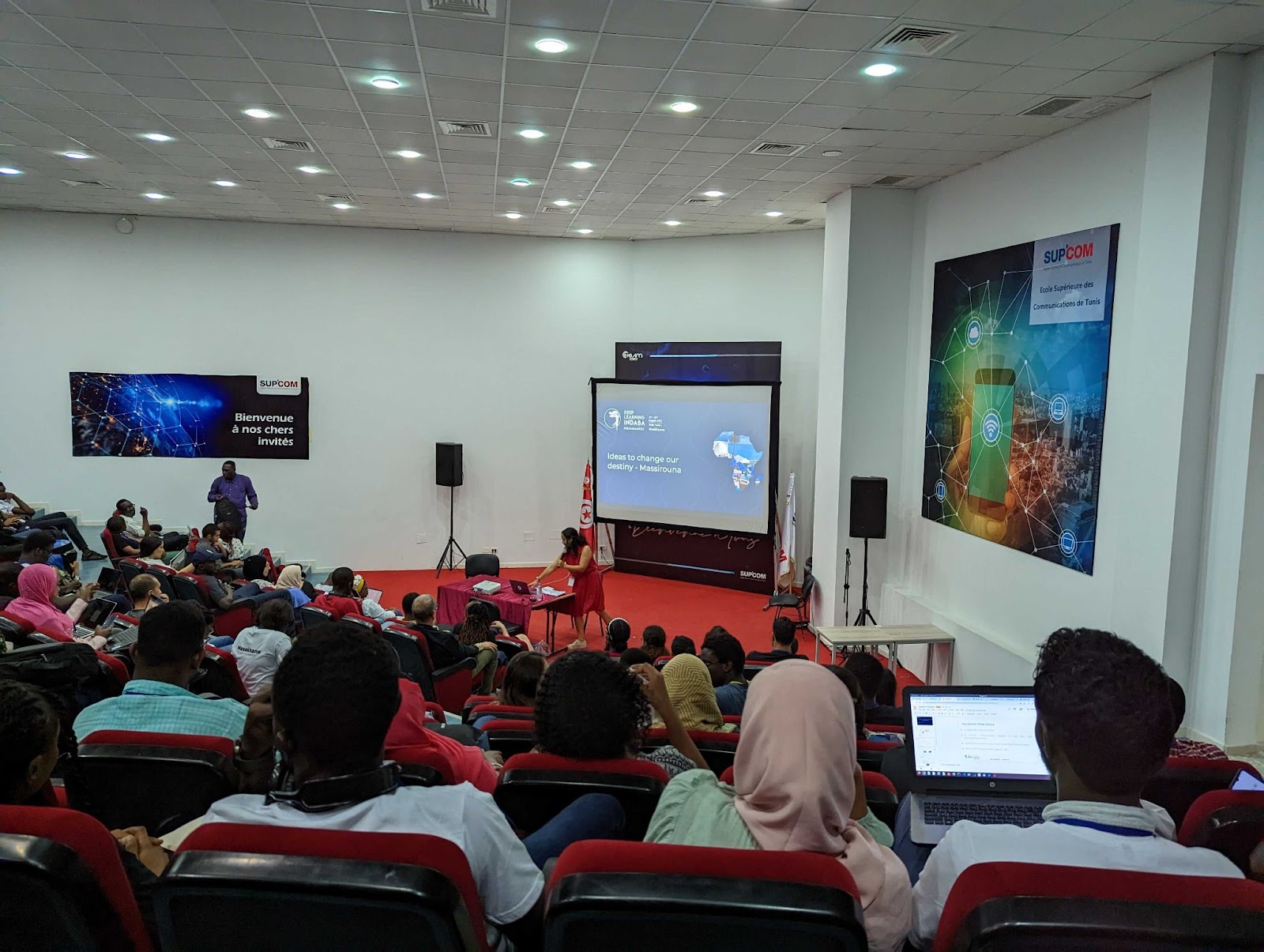
The Ideathon 2022 was announced 4 days before the Indaba, and officially launched when the event started. Interested candidates had two days to submit a proposal and four days to put together a complete project description and a short pitch. With this short timeline, we were extremely impressed by the number of projects and participants that came forward to take on this challenge, and by the enthusiasm of so many others! The table below lists the topics and teams that submitted a project. These teams had the opportunity to exchange with our esteemed mentors, and presented to our wonderful jury! We are really grateful to everyone who presented a pitch, to our mentors and judges for volunteering their time, including a long evening at the auditorium and for their helpful, kind and insightful feedback, and for all the organisers who helped collecting the proposals, setting up the mentorship session, and preparing a wonderful evening at the auditorium! You all made the success of this first edition!
Note: This information is collected from materials shared with us by attendees, ordered by the time of submission and represents the teams at the moment of the presentation. Note that teams, titles and other details might have changed. If you see any missing or incorrect information, please contact us and we will rectify it. The projects in bold are those that obtained the highest scores from our jury, please refer to the second part of this post for more information on these proposals.
| Title | Topic | Team members | Represented countries |
| 911 PhD: An app solution for struggling researchers | Healthcare | Amel Laidi, Assala Benmalek, Cheima Mezdour, Derguene Mbaye, Ihssene Brahimi, Wathela El Hassen | Algeria, Nigeria |
| A Machine Learning Approach to B2B Instant Lending and Negotiation | Optimisation of Offers in Fintech and/or Synthetic Financial Data | Michael Leventhal , Yannick Serge Obam, Arnol Fokam | Mali, Cameroon, South Africa |
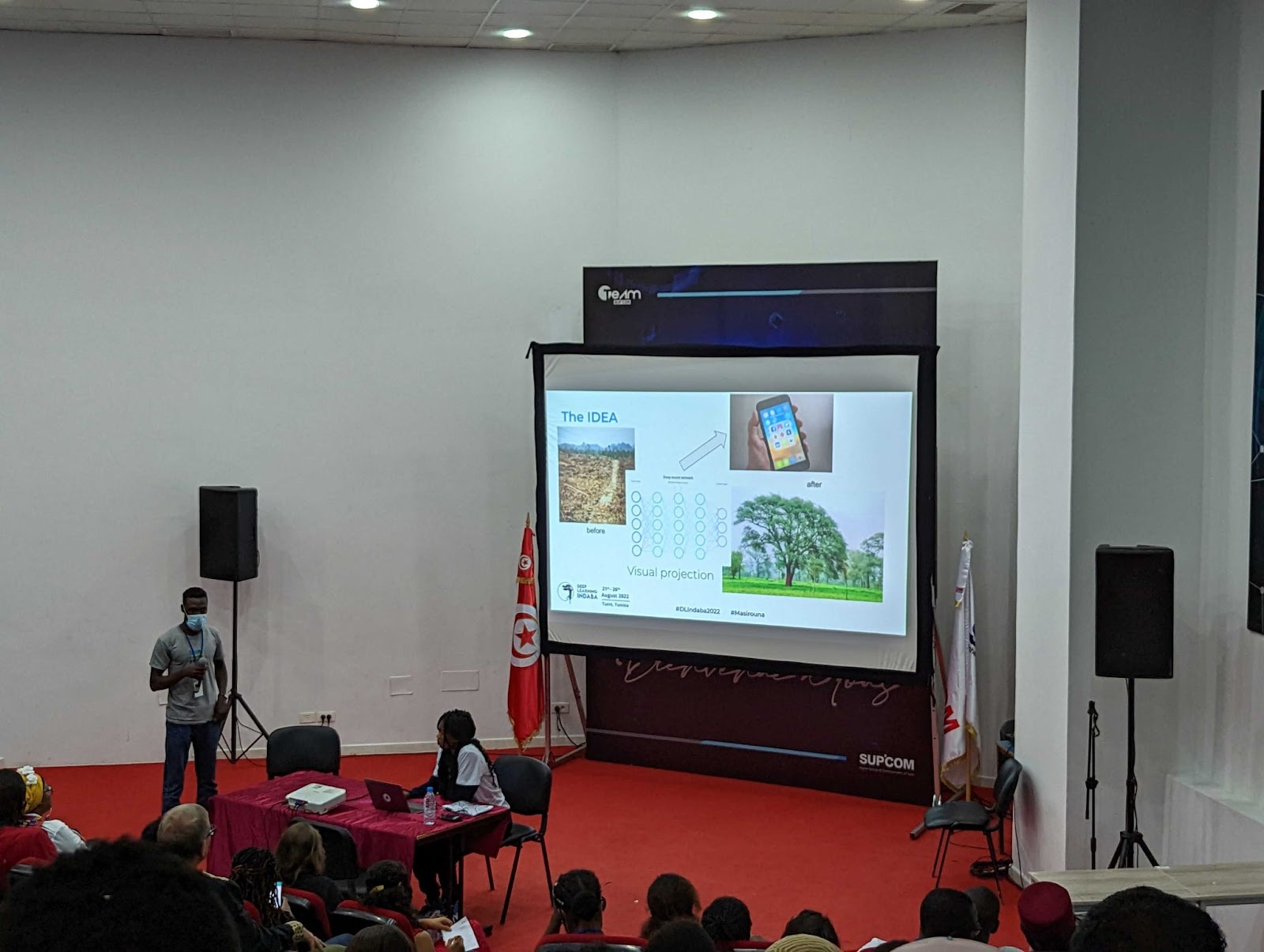
| FORESTED.AI | Visual forecasting of climate changes | Kobby Panford-Quainoo , Mary Salami, Olaleye Eniola | Ghana, Nigeria |
| Scalable AI-Community Development & Management | Community Development | Essa Mohamedali , Safa Trabelsi, Rose Delilah Gesicho, Sokhar Samb | Tanzania, Tunisia, Kenya, Senegal |
| AI4FRiA | AI for Food Self-Sufficiency in Africa | Jimoh Abdulganiyu, Ines Haouala, Bolaji Akorede, Awa Ly, Marvelous, Luffy. | - |
| Machine Learning Pre-Term Birth (PTB) prediction using medical records | Machine Learning for Healthcare | Bonaventure Dossou, Karelle Gbenou, Miglanche Ghomsi | Benin, Cameroon |
| Intelligent POC System for Mycetoma Early Detection | Point of care | Hyam AliGizeaddis L. SimegnOmer Ali | Sudan, Ethiopia |
| Conversion of gasoline tractors to hybrid tractors | Emmanuel Akanji, Abigail Wangeci | Nigeria, Kenya | |
| Amathambo AI: Optimising Resource Allocation in African Health Systems using Deep Learning | Health and drug discovery | Kira Dusterwald, Ian Omung'a, Sicelukwanda Zwane, Simphiwe Zitha | UK/South Africa*, Kenya/Mauritius*, UK/South Africa*, Germany/South Africa* * nationality |
| A bibliometric analysis on artificial intelligence in medicine in Africa | Zakia Salod, Oyindamola Olatunji, Bonaventure Dossou | South Africa, Nigeria, Benin | |
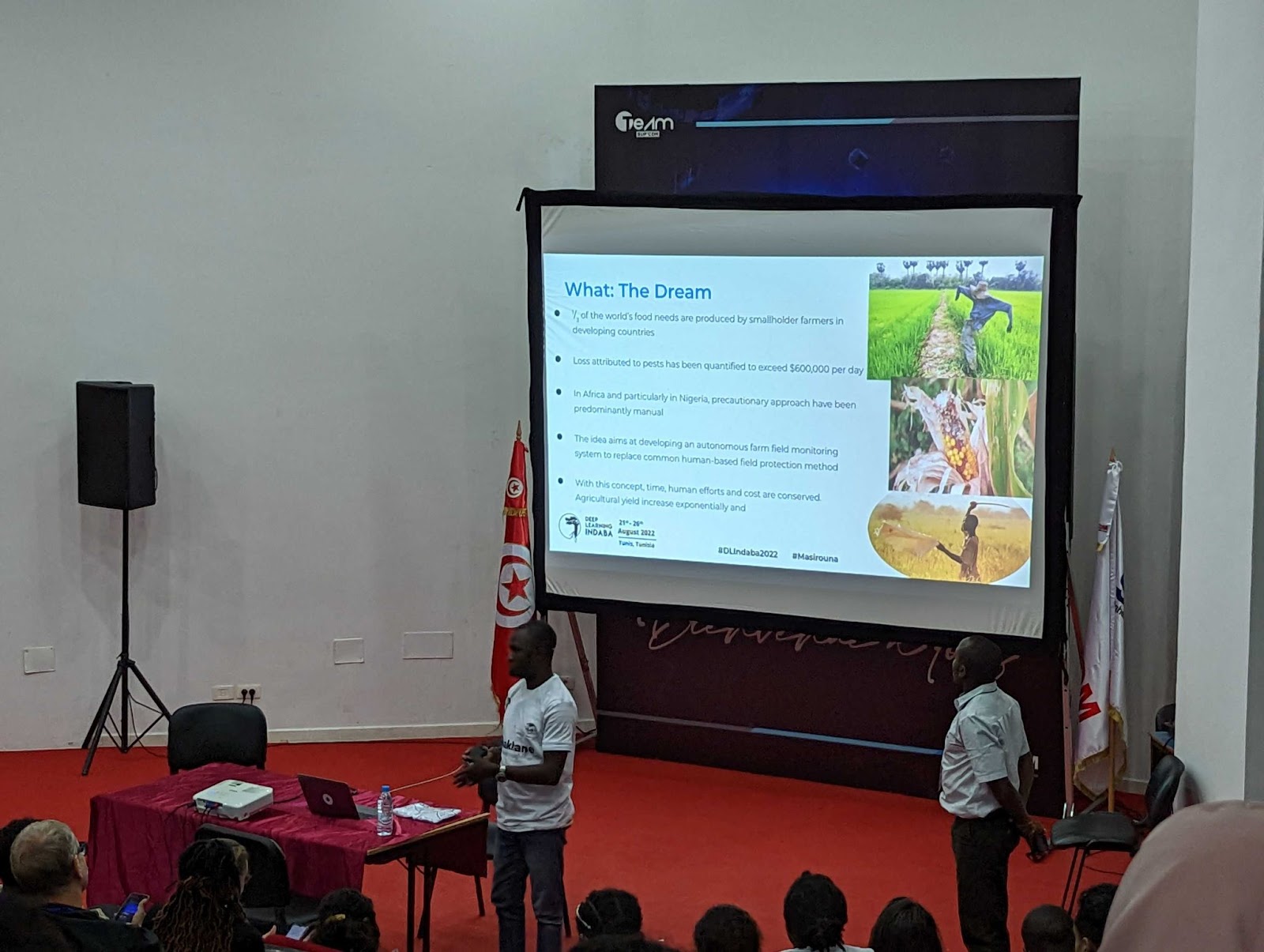
| digiScare: leveraging on TinyML for Farmland pest detection and mitigation | Segun Adebayo, Jean Amukwatse, Grishon Ng’ang’a, Halleluyah Aworinde | Nigeria, Uganda, Kenya | |
| AI-Guided Medical Support ChatBot | AI-Guided Medical Support System | Houssem Ben Khalfallah, Ichrak Hamdi,Everlyn Asiko, Mariem Jelassi, Fred Sangol Uche, Peculiar Abolade | Tunisia, Nigeria, Gambia, Kenya |
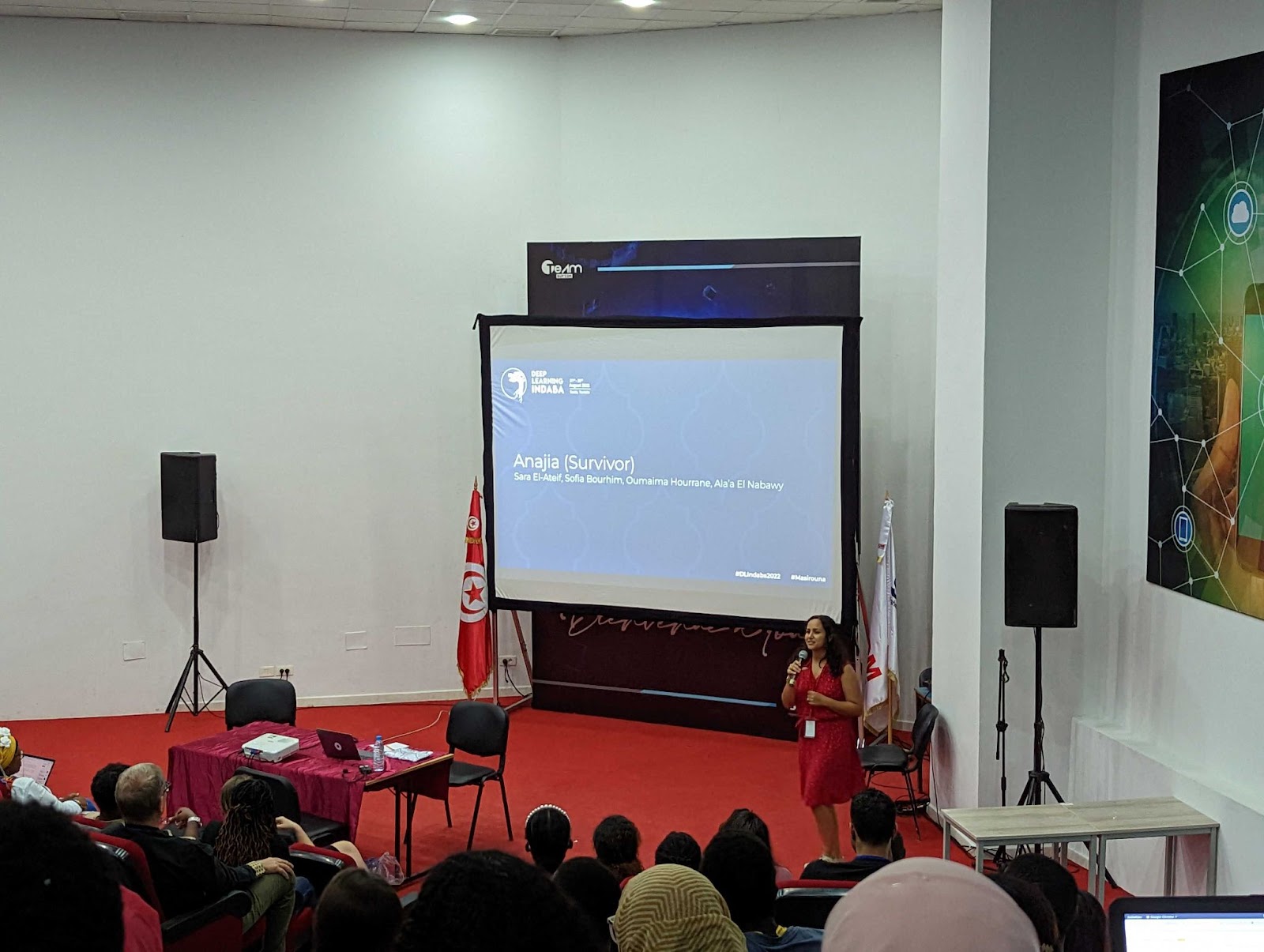
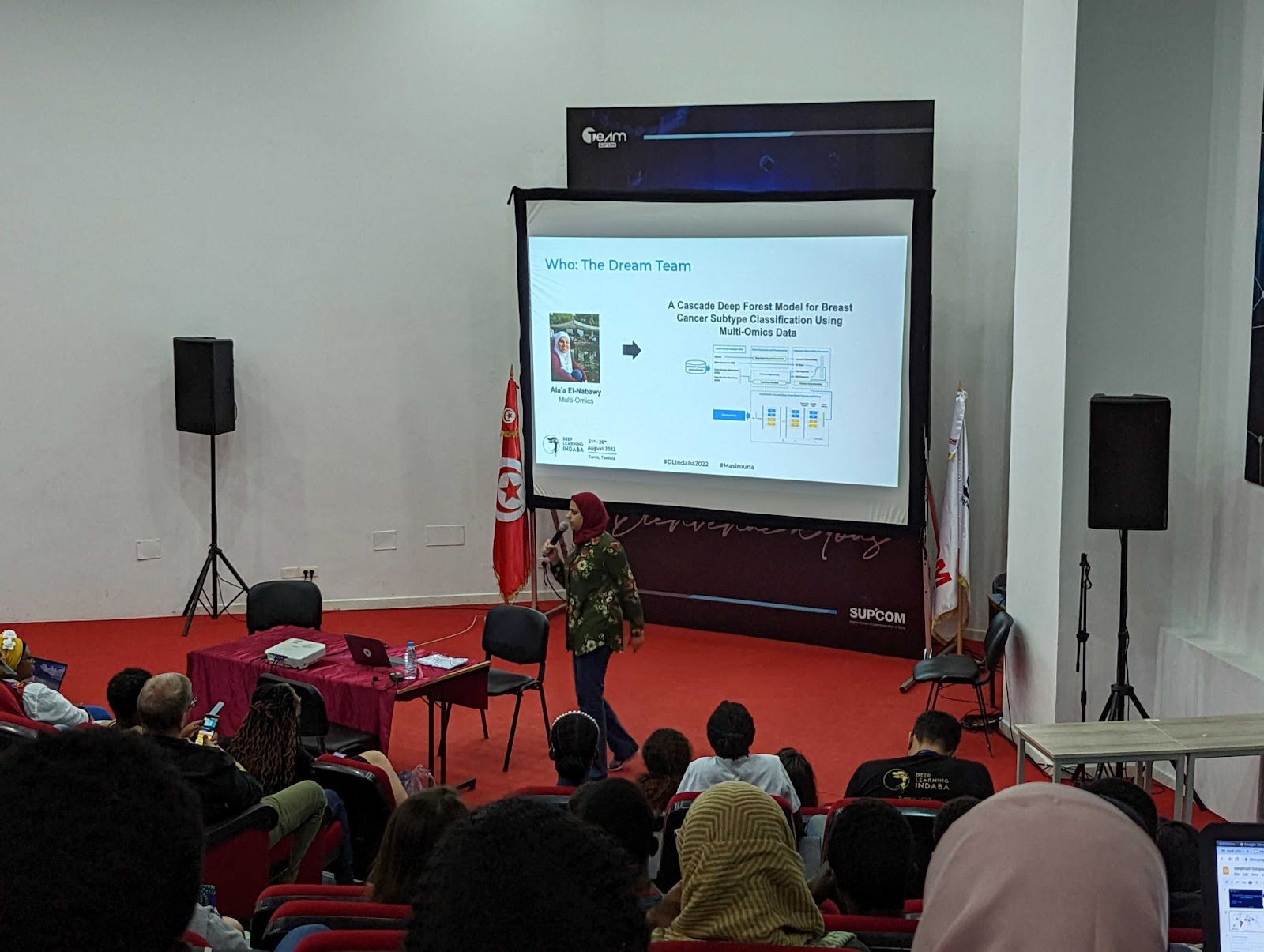
| Anajia (Survivor) | Fighting/Managing Women's Cancers in Africa using ML | Sara El-Ateif, Sofia Bourhim, Oumaima Hourrane, Ala'a El-Nabawy | Morocco, Egypt |
| African Sign Languages Translation | Mardiyyah Oduwole, Shester Msouobu, Steve Kolawole | Nigeria, Cameroon |

Following the Indaba
Following the Indaba, the teams were able to start their own adventures and grow their ideas into different forms! The Ideathon organising team scheduled quarterly catch ups, and interacted with the teams by email.
Watching this progress has been a wonderful experience. Each team was awarded a generous grant of $10 000 in compute credits from Google’s Compute for Underrepresented Researchers Programme (CURe).
We were impressed with the way teams managed their multi-national collaborations and were open about the challenges they faced. We hosted check-in sessions to see where support was needed.
Reflecting on the challenges
The first edition of the Ideathon was launched in the true spirit of the Indaba: as an experiment. While there are many successes to celebrate, it is important to acknowledge the challenges before looking forward to next year. The Ideathon started with an idea, and was built on the fly during the Indaba in 2022. The interest in pitching ideas, and well as supporting the Ideathon through mentorship and judging was really encouraging. This rapid development was necessary to launch the idea, but it has taught us some valuable lessons about scale and sustainability which we’ll be taking with us into the next year.
We were taken by surprise at the number of application-based pitches and we recognise there is great entrepreneurial ingenuity and drive in the community. However, it did pose a challenge in sourcing mentorship, as the Deep Learning Indaba Mentorship programme is mainly geared towards research based projects - and we struggled to answer questions about investing and strategies for growing a startup team. However, we believe that the teams have shown great initiative in sourcing their own support, and reaching out to us when an extra nudge was needed.
Looking forward to this year’s Ideathon
We will have two tracks this year: research and applications. We’d like to continue fostering the development of application-based projects, as well as provide support for the development of research ideas. Teams will have the opportunity to have their pitches reviewed and selected to pitch at the Thursday session at the Indaba. Winning teams will be awarded compute credits from Google’s CURe programme. The winning teams will have regular check-ins with the Ideathon organisers who are available to discuss challenges and support as needed.
If you are interested in supporting longer-term mentorship of any of the winning teams, in both applications and research-based projects, please email mentorship@deeplearningindaba.com.
Winning projects
You will find below short descriptions of the projects that were selected by our jury last year. All projects and proposals were of an exceptional quality, and the competition was tight. Nevertheless, this set of projects shined with respect to the three axes our jury was looking for:
- Motivation and potential impact
- Feasibility of the project
- Diversity of the team
Some of these project proposals were provided by the team members. The Ideathon team completed the rest. The latter are indicated by a star next to the title.
We hope these descriptions would help to inspire new contestants. We also invite you to get in touch with the teams if you have questions or if you would like to help or contribute. Enjoy!
Amathambo AI (formerly Stimela)
How can Africa provide adequate healthcare under constrained resources? With 1.55 African healthcare workers per 1000 population, well below the WHO's recommended 4.45:1000 ratio and projected to worsen, the need to optimally allocate the scarce resources of healthcare personnel is dire.
Amathambo AI will solve the healthcare resource allocation problem. Our first product pitch: to revolutionise inefficient, traditional paper-based rostering systems by automation and patient influx prediction, achieving reduced patient waiting times, better health outcomes and boosted staff satisfaction. Data suggests that variations in patient load correlate with socio-geographic and temporal variables (e.g. paydays, sporting events, load-shedding), yet staffing is not adjusted for busier periods. There is a clear opportunity for machine learning techniques to match staff-on-duty rostering to predicted patient load.
Our vision stems from the serendipitous meeting of a team – Dr. Kira Düsterwald, Sicelukwanda Zwane, Simphiwe Zitha, Ian Omung’a and Dr. Brad Segal – with experience in African health systems and machine learning, and egged on by the Ideathon. Our name has a double meaning. Amathambo is an isiZulu/isiXhosa word for “bones and joints”, and indeed we aim to strengthen the skeleton of African health systems – grappling with core functional needs. Amathambo also refers to the traditional divination technique of throwing the bones, used by sangomas. In the same spirit, we leverage predictive machine learning-inspired algorithms to achieve our aims.
Our journey has been strengthened by support and mentorship from partners at South African hospitals, DeepMind and the Deep Learning Indaba, including winning $10000 in Google Cloud Platform credits in the Ideathon from the CURe Programme under Google Brain Research. Amathambo is involved in several accelerators and the original Indaba team meets near weekly, juggling PhD projects and work to make the Amathambo dream come true. We incorporated as a UK company in April this year.
As machine learning experts, medical doctors and fullstack developers from South Africa and Kenya, we have developed and are soon to implement user testing of the basic automated rostering backend. The data to inform our patient load predictive model prototype is awaiting ethics approval, and we will pilot dynamic staff-to-patient matched rosters in partner hospitals in South Africa in the near future.
We see our business model, developed with a co-founder who has a successful health-tech start-up in Kenya, as hybrid. From market research, we know that unlike in the West, individual staff members make rosters manually on paper/Excel, consuming valuable staff/personal hours. Amathambo will charge individual staff members using the basic rostering tool flexible, low subscription fees, significantly scalable across Africa. Simultaneously, cost-constrained public facilities can motivate for minimal-cost implementation of the unique-per-hospital patient predictive rostering system.
We plan to extend to tackle other optimisation problems, including bed management and ambulance routing. Amathambo strives to improve African healthcare – optimally.
Reach out to the team to find out more: amathambo.ai@gmail.com
Scalable AI-Community Development & Management *
As active community members, the team's main motivation was to scale and accelerate community building, help manage and develop our communities in scalable and automated ways, foster community initiated collaboration and support and increase collaboration fluidity. They therefore proposed a system that will bring together and automate community management and community development through capacity building and mentoring. The system would for example leverage recommendation engines for matchmaking, and NLP technologies for scalable document and content reviewing. This system is primarily targeted to IndabaXs and local AI communities and would help answer questions that the team members themselves encountered through their own experiences, such as “Where do I get started and opportunities to learn about AI?” or “How do we keep track of larger and larger communities?”. The team is planning in a first phase to focus on aspects like management, capacity building and mentoring, before moving on to building matchmaking tools or platforms to foster and increase engagement.
African Sign Language Translation
In Africa, individuals with hearing disabilities face a significant challenge regarding communication in their daily lives. The most obvious challenge arises from the reliance on sign language, a visual form of communication that may not be universally understood by the hearing population. This communication barrier can lead to feelings of isolation and exclusion, limiting their ability to fully participate in conversations, social interactions, and community activities. In situations where sign language interpreters are not available, individuals with hearing disability may struggle to access vital information, whether in educational settings, healthcare facilities, or public events. Additionally, misunderstandings and misinterpretations during communication can occur, further exacerbating the frustration and emotional toll on individuals with hearing disabilities.
Sign language translation is a promising technology, but its application to African sign languages is relatively unexplored. The project acknowledges the under researched nature of African sign languages and seeks to shed light on this area of study. It recognizes that the lack of comprehensive research and available resources poses challenges when applying existing technologies, such as the Sign Language Transformer (SLT), to African sign languages. Key among these challenges is the scarcity of high-quality sign language datasets, both in terms of quantity and noise levels. While datasets for more widely studied sign languages like American Sign Language are abundant, African sign language datasets are limited and often noisy.
To address the data quality challenges inherent to African sign languages, the project proposes an innovative approach centred on leveraging pretraining and fine-tuning methodologies. By initially pretraining on established sign languages like American and British sign languages—languages upon which many African sign languages are based—the project aims to bridge the data gap and harness the shared linguistic foundations. This initial pretrained model will then be fine-tuned using African sign language datasets, allowing for the adaptation and optimisation of the recognition system for the unique nuances of African sign languages. This two-step process seeks to enhance accuracy and performance, effectively reducing communication barriers experienced by individuals with hearing disabilities. Additionally, the project is tapping into a valuable resource for data acquisition—the Bible translated into sign language available on jw.org. This freely accessible dataset provides a comprehensive foundation for finetuning and testing the pretrained sign language transformer, further enriching the project's capabilities and potential impact.
In conclusion, the successful implementation of this project would have a profound impact on the lives of individuals with hearing disabilities in Africa. By effectively bridging the communication gap through accurate sign language translation, the system will empower individuals with hearing disabilities to fully participate in educational settings, providing equal opportunities for learning and personal growth. Moreover, the project's focus on fostering collaboration and research in African sign languages may drive future advancements in inclusive technologies for the deaf community.
911 PhD
When you have a medical emergency you call 911, but what about a research emergency?
This was the inspiration behind 911PhD, the reason that brought 6 people from different backgrounds, countries, and fields together.
911 PhD is an app solution for struggling researchers. It is a plateforme that PhD students use to tell their research story, with all its ups and downs. The stories are then stored in a private database that is then used to help struggling users.
When a user signs up, they get to answer a number of suggested questions to state their problem, the platform then uses a well trained language model to pair the user with people from the database who have been through, and survived, similar problems.
What sets the plateforme from any other available websites is its privacy. The conversation is done in private chat rooms, and no stories are published publicly.
The plateforme will also have an alarm system to detect sensitive/depressive messages. If a message is judged to have any triggers, an admin is notified , they would check the message and forward it to a specialist (psychologist).
The idea was born from the struggles of everyone in the team. It has been lurking back for a while, but we never knew the urgency of it until we talked with many people at the Indaba event. The event was a gathering of remarkable people, with amazing skills, but they all relate to the pressure of research.
The last inspiration that set the idea to motion was a sentence told by "Sara Hooker" in her keynote, she said "you guys are lucky to be here at this event, surrounded by the support of fellow researchers", and we were lucky, the experience made us stronger as researchers and gave us a boost of confidence, but what about everyone who weren't as lucky? What about everyone who doesn't have moral support from their communities?
911 PhD will have their backs!
AI-Guided Medical Support ChatBot
In recent times, the use of artificial intelligence (AI) in health care has led to substantial advancements in patient diagnosis and treatment. One such innovation that allows for this to happen is the presence of our AI-guided medical support chat. Hence the birth of the idea for us to build a tool that will revolutionise the way medically-inspired chatbots interact with patients. This tool seeks to provide AI and medical expertise to provide personalised and timely health care assistance to patients.
It is designed in such a way to engage the patient, offer information in the patient’s own local language and even assist in preliminary diagnostics thereby transforming the way medical support is delivered.
It seeks to bridge the gap between patients and healthcare providers, offering the patient an enhanced healthcare experience. Some of the functions our AI-Guided medical support chatbot provides includes the following:
- It uses advanced natural language processing (NLP) algorithms to engage patients in conversations about their symptoms. By asking targeted questions the chatbot can assess the severity of the symptoms and provides preliminary advice on whether the patient should seek immediate medical attention or go for self-care measures.
- Our chatbot will be accessible 24/7 for patients to engage with. Which means patients can seek medical advice and information when and wherever they need it.
- The accessibility of information in patients' own local language thanks to the presence of trained models in machine translation for African languages and open source conversational AI platforms, makes our chatbot unique in that it breaks the language barriers and ensures that health care information is accessible to a diverse population.